
The Makerfield Model
How Andy Burnham built the coalition Labour needs to beat Reform

The rain never quite arrived. The dark clouds hung over Makerfield’s red-brick terraces throughout Thursday’s polling day threatening a deluge that never quite arrived.
Rain holds a certain terror for polling day activists desperately trying to get out the vote - but last week, we stayed both dry and happy as we bundled along with algorithmic precision down cobbled streets, through the high streets and estates, steered by the Labour Doorstep app and bundles of bright red out cards.
Every so often another splash of colour would cheerfully appear from around a corner: there were so many volunteers Labour could afford to deploy big groups with large billboards emblazoned with “Vote Andy. Vote Hope.” And when the results came in, our wildest hopes had been met.
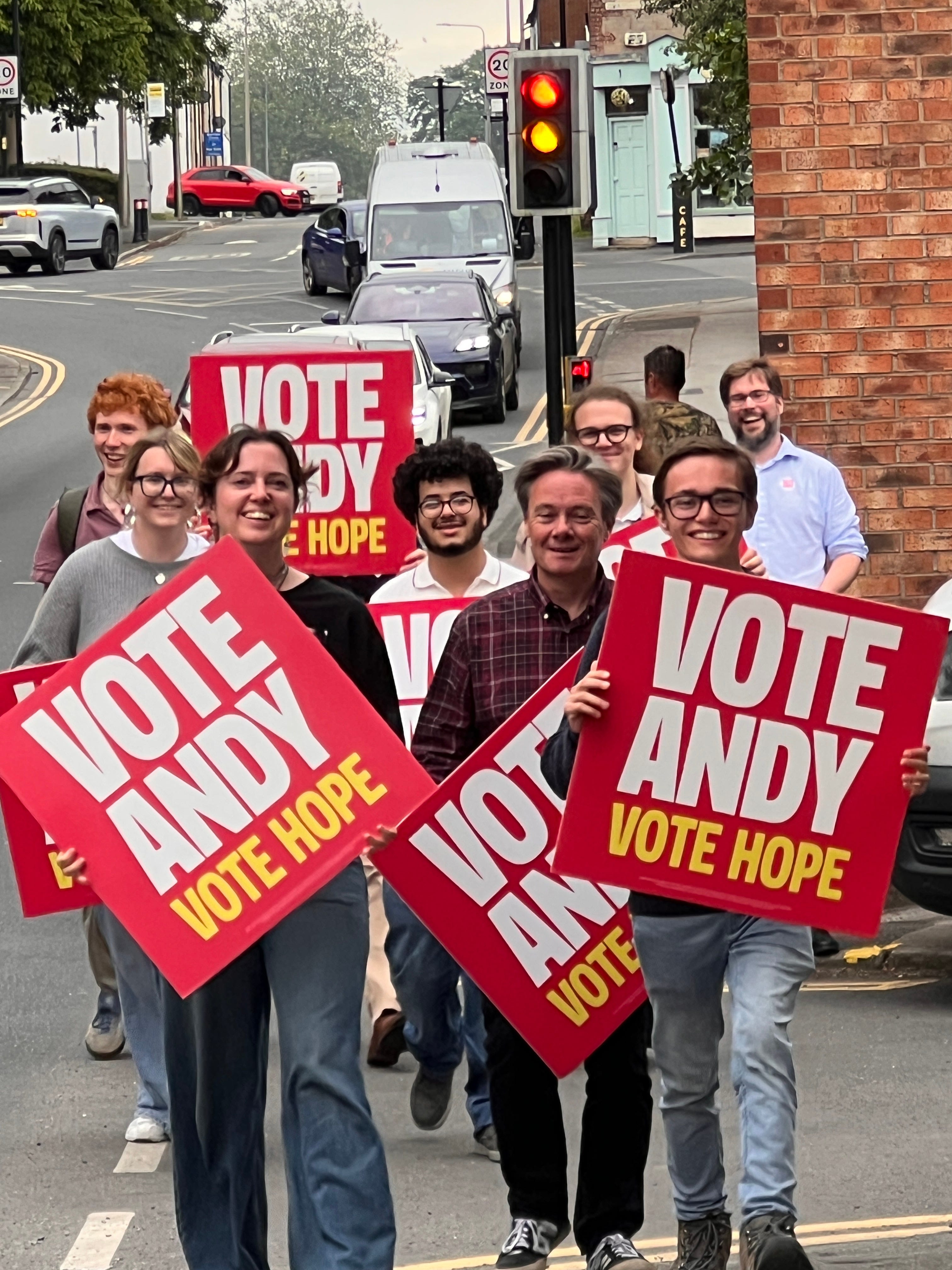
Andy Burnham didn’t just hold the seat of Makerfield. He demolished every expectation. And in doing so, he has shown us something important about how Labour can beat Reform and how democrats win in an age of populism
The scale of Andy Burnham’s victory surprised almost everyone. Labour’s vote rose by 10% to 55 per cent. Turnout increased by more than six points, an extraordinary achievement in a by-election. Labour not only increased its share of the vote while in government; it increased the actual number of Labour voters. As Peter Kellner has pointed out, that is something almost unseen in modern British politics.
Nor was this simply a victory secured because Reform stumbled. Reform still secured 35 per cent of the vote in one of its strongest target seats. But Mr Burnham mastered lesson no 1 for beating populism: he mobilised not just Labour’s heroic voters - but a heroic coalition; Green and Liberal Democrat support almost disappeared as anti-Reform voters voted tactically as Labour took almost the whole 55% of Makerfield’s progressive residents.
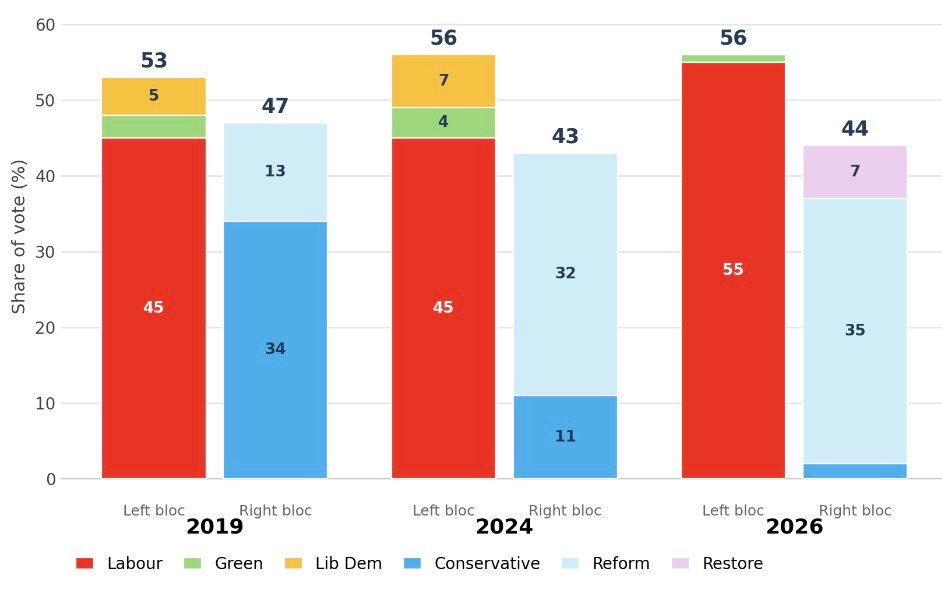
Yet tactical voting alone does not explain the result. Mr Burnham substantially outperformed Labour’s national standing. The question is why.
Some of the answers begins with some research we carried out while writing Why Populists Are Winning.
One of the problems with much political commentary is that it treats “Reform voters” as though they are a single army marching in unison. They are not. In fact, our work (with Best for Britain and YouGov) identified five distinct political tribes of Reform-curious voters, and Makerfield mirrors that national picture remarkably closely.
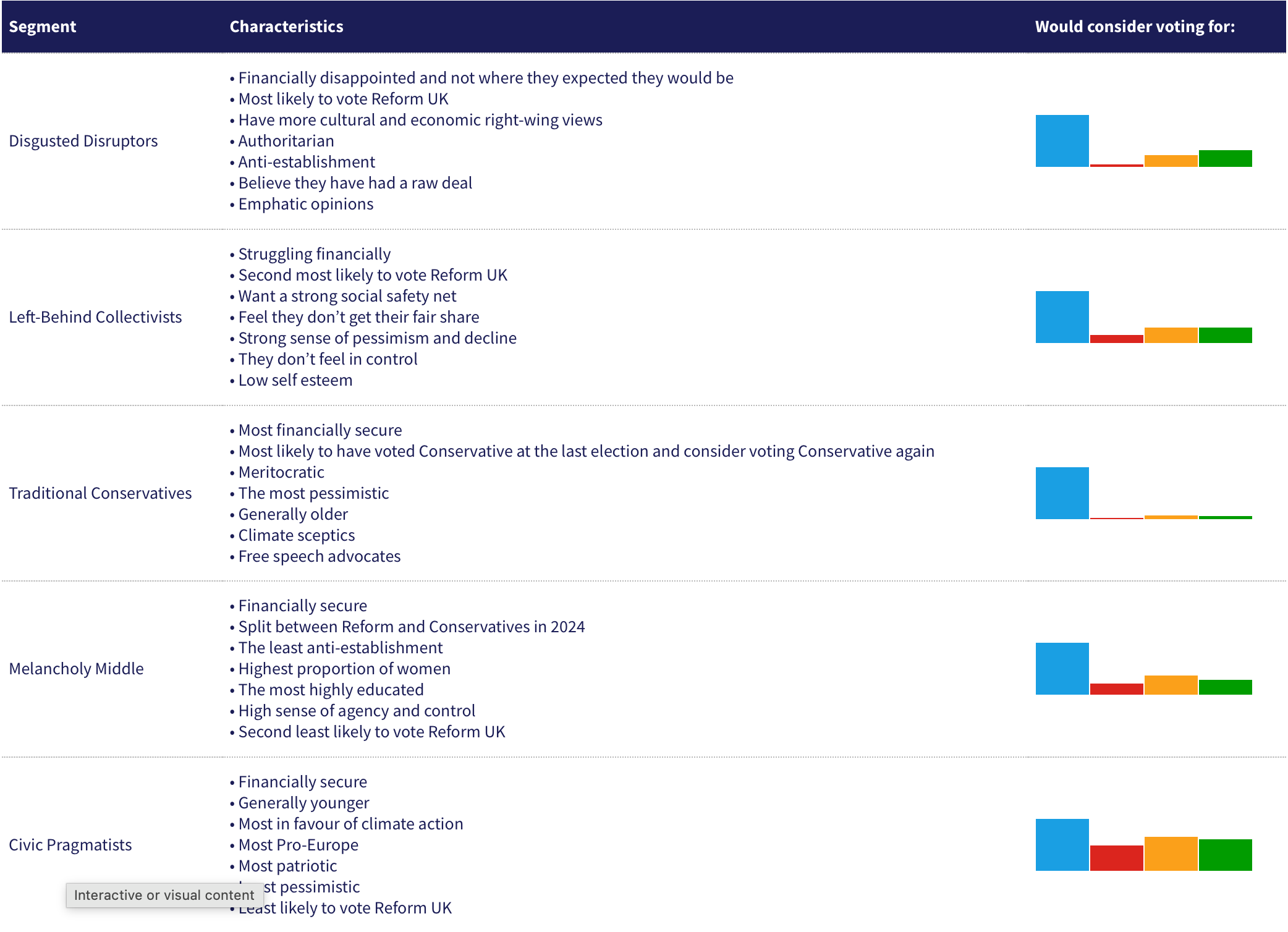
Around 22 per cent of Makerfield’s Reform curious voters are Disgusted Disruptors: deeply distrustful of politics and attracted to anti-system arguments. But there is a much bigger group of Reform-curious voters who are democrats from different traditions prepared to unite against a politics of permanent grievance.
Around 32 per cent of Makerfield’s Reform-curious voters are ‘Left Behind Collectivists’: they are people who feel Britain no longer rewards hard work fairly. They want fairness restored.
Twenty-one per cent are Civic Pragmatists, less interested in ideology than whether government actually delivers. They are looking for reassurance and above all competence.
Fifteen per cent belong to the Melancholy Middle: anxious, moderate voters who believe the country is drifting in the wrong direction but remain open to practical solutions.
Traditional Conservatives make up the remainder.
That distribution should shape how we think about the electoral battlefield. The decisive battle is not for the Disgusted Disruptors. I suspect much of that vote went to Rupert Lowe’s Reclaim party. The battle is for everyone else.
The ‘Left Behinds’ still believe in fairness. The Melancholy Middle still seek reassurance and the Civic Pragmatists still judge politicians by results.
So the key is a strategy that moves these more tractable voters - and this insight helps explains why Mr Burnham’s campaign was so very well judged.
One of the arguments in Why Populists Are Winning is that to persuade the more tractable Reform curious voters, we need a simple strategic structure. Begin with pride in place and past. Acknowledge a wound. Offer agency. And finish with a credible plan.
Mr Burnham’s campaign did exactly this.
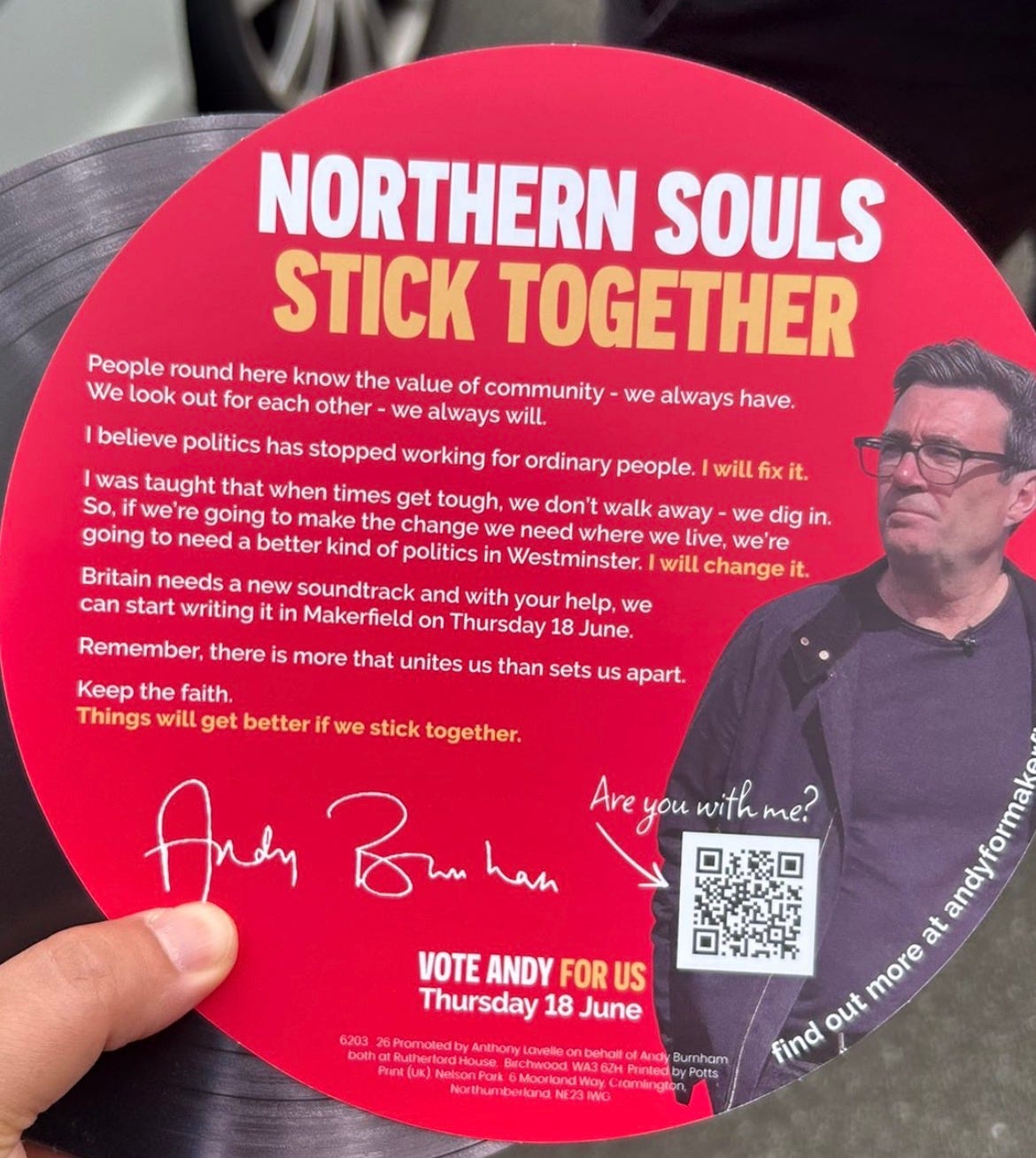
His messaging celebrated tradition, community and place. Take this great example which was my favourite leaflet: the circular “Northern Souls Stick Together.” It spoke about the value of community and argued that politics had stopped working for ordinary people before saying that it could be fixed.
The next step was not to ask people for blind faith - but to offer proof. The leaflet shared the weekend before polling day was headed “We’ve Changed Greater Manchester.” It pointed to a record: neighbourhood policing, lower crime, technical education placements, bus franchising and capped £2 bus fares before inviting voters to “Now Let’s Change Makerfield.”
Finally came a handwritten-style “Our Makerfield to-do list”, setting out specifc local priorities from restoring Ashton Library and building council homes to securing a new pharmacy and GP surgery in Hindley Green.
This adds up to one of the crucial lessons offered in Why Populists Are Winning: the need for plausible optimism.
When we look at both Reform and Green literature and arguments we see a common pattern; Reform captures anger and the Greens capture hope. Mr Burnham managed to weave both together and add one crucial ingredient more. Anger offers few answers. And after years of broken promises, hope by itself is no longer enough. So optimism - which is the antidote to the populists’ nostalgia - has to be made plausible.
So Mr Burnham’s campaign did not simply promise change. It argued that because Greater Manchester had already changed, further change was believable. That is a profoundly different message from the populist playbook.
Populists often build their campaigns around grievance and restoration. Mr Burnham built around a combination of insurgency and delivery.
In an age of populism, this focus on delivery is vital for political persuasion. That is why Mr Burnham’s personal reputation mattered so much. He was not simply asking voters to trust him. He was inviting them to judge him on what he had already done.
And this is the final lesson. For Mr Burnham was able to trade on his reputation as a strong leader. Locally he may be known for his track-record as Mayor. Nationally, many know him for standing up for his region during the days of Covid and lockdown.
He’s seen as a fighter. In today’s political landscape, this is essential - and it’s why hasty u-turns cannot be afforded.
Sam Freedman’s work with Persuasion UK published last week lights up the truth that by and large Reform supporters are not ideological populists but frustrated voters prepared to “roll the dice” in search of a strong leader who will actually shake things up and change thing.
I found something very similar.
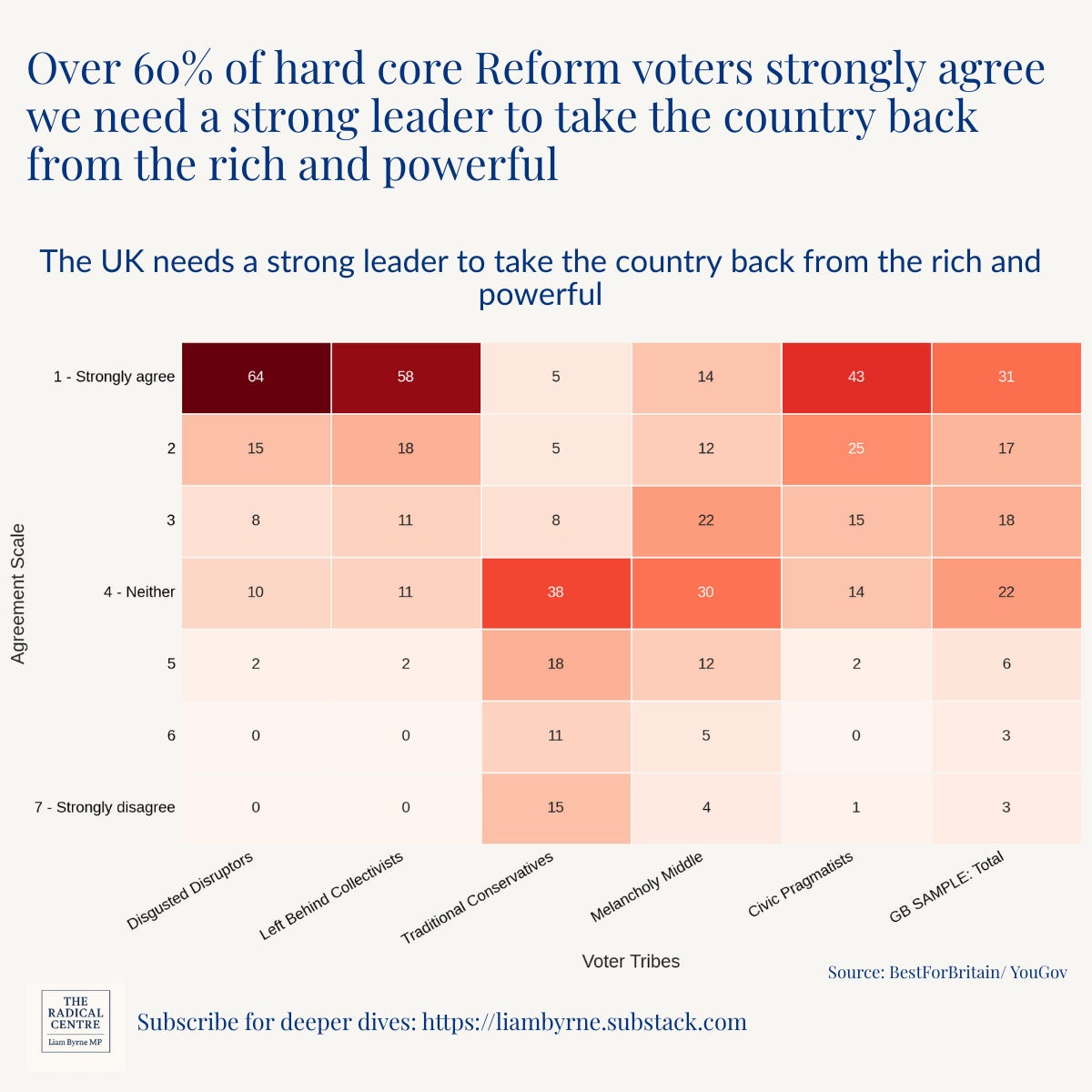
In fact, one of the strongest results in our research is that almost two-thirds of Disgusted Disruptors and almost six in ten Left Behinds strongly agree that Britain needs a strong leader to take the country back from the rich and powerful. Even among Civic Pragmatists, more than four in ten agree.
It would be easy to misread this as a demand for authoritarianism - but I think that would be wrong. Read alongside the Makerfield result, it suggests something different.
People are not simply looking for stronger leaders. They are looking for results and know that requires a Government capable, strong and determined enough to take on vested interests. A Government that’s capable of making markets work fairly. A Government capable of delivering.
Mr Burnham did not win by becoming Reform-lite. He won by combining pride in place with a recognition of people’s frustrations, by demonstrating that politics could still deliver, and by offering plausible optimism rooted in evidence rather than merely slogans.
There is still a long way to go. One by-election does not reverse decades of political realignment, nor does it erase Labour’s long-term decline in many industrial communities. Peter Kellner is right to caution against reading too much into a single result.
But Makerfield does tell us something important.
Populists inherit powerlessness. Democrats win when they restore agency. The challenge for Labour is therefore not simply to become better at criticising Reform. It is to become better at proving that democratic politics still has the power to improve ordinary lives. That is hunger is what unites the ‘Heroic Coalition’ Labour must mobilise to win a second term of power. And after Makerfield, it looks a little less like a theory and a little more like a path back to a governing majority.
This coup is a huge turn off to Labour members. As a member I can’t carry on with Labour. Burnham’s popularity is already tanking to -11.
I expect it to drop even more by Christmas.
I’m truly hugely disappointed that PLP are ignoring us and I’ll never forgive the cabinet for turning against Starmer.
That’s not a model.